RUN WITHOUT KNEE PAIN
The 3 Best Exercises for Knee Pain
Knee pain has an evil way of stealing the joy out of running.
And it leaves most runners in the same cycle:
They take two weeks off, rest and wait. Then the pain fades. They feel optimistic, put on their shoes, and go for a run. But three miles in, the exact same pain comes back.
Here is the truth:
Knee pain has an evil way of stealing the joy out of running.
And it leaves most runners in the same cycle:
They take two weeks off, rest and wait. Then the pain fades. They feel optimistic, put on their shoes, and go for a run. But three miles in, the exact same pain comes back.
Here is the truth:
Your knee is not broken.
Rest calms down inflammation, but rest does not build strength.
To fix this, you need to rebuild load capacity, and that starts with the right exercises.
And to pick the right exercise, we need to first identify where the pain is coming from.
STEP 1 / Clarity
Where does it hurt?
Name the signal before you train it.
Understand where it hurts to pick the right exercise.

FRONT
FRONT
Below or around the kneecap when you load, squat, or descend.
Pain under or around the kneecap. Covers both Runner's Knee (kneecap tracking issues) and Jumper's Knee (patellar tendon strain from explosive loading)
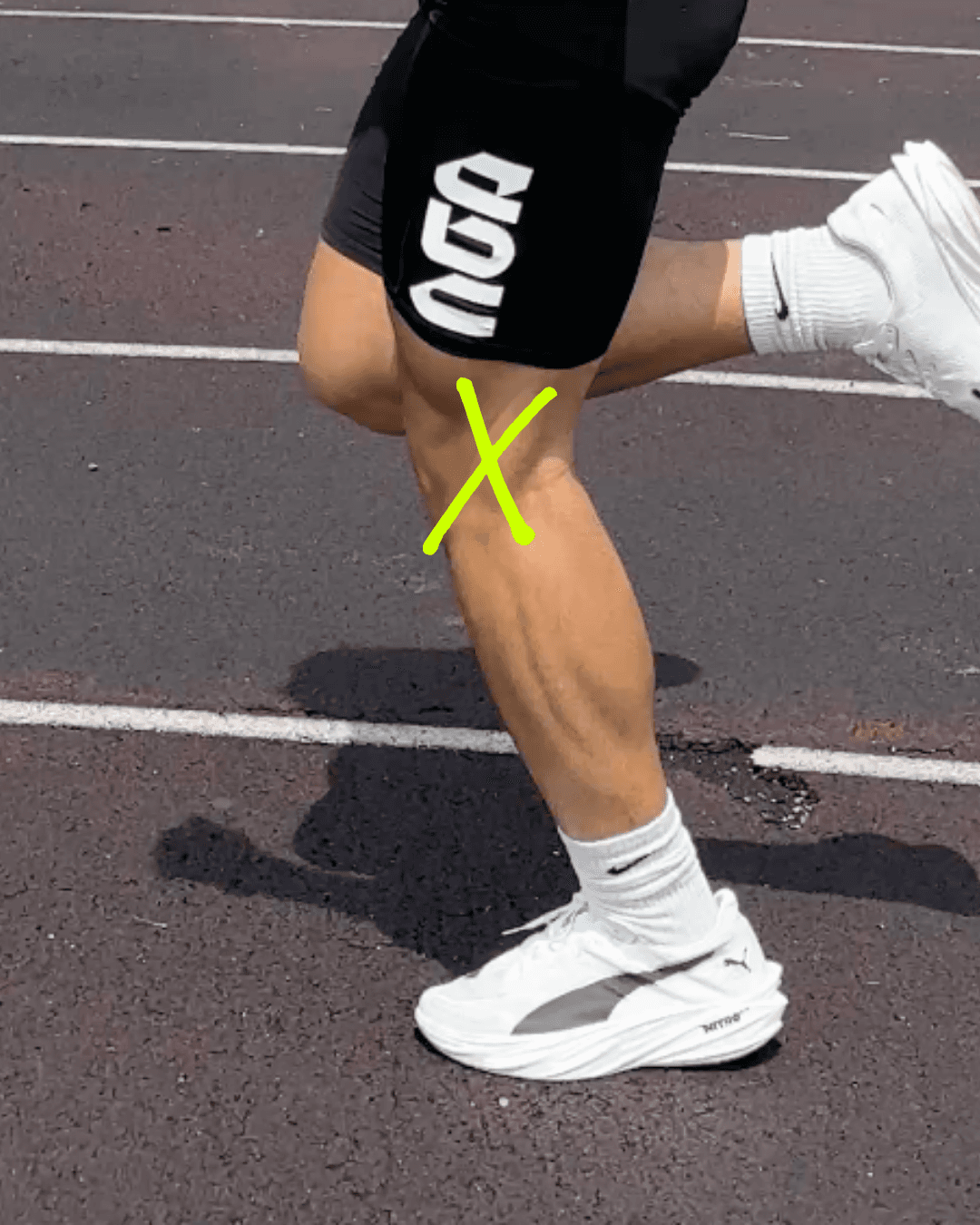
OUTER
OUTER
A sharp side signal that appears as the run gets longer or faster.
Sharp pain on the outer side of the knee. Usually related to IT band irritation.

INNER
INNER
A deep, medial ache that often flags control—not just flexibility.
Pain at the inner knee or upper shin. Usually related to a weakness in the Pes Anserine.
STEP 2 / FIND your exercise
STEP 2 / FIND your exercise
The 3 Exercises
When your knee hurts, heavy dynamic lifting or plyometrics causes sharp aggravation. But complete rest causes muscle loss.
The middle ground is low-impact exercise since you get to strengthen the muscles around the knee without irritating the joint itself.
Based on where you’re feeling the pain, perform that exercise 3 to 4 times a week to reduce knee discomfort and build a foundation of strength.
When your knee hurts, heavy dynamic lifting or plyometrics causes sharp aggravation. But complete rest causes muscle loss.
The middle ground is low-impact exercise since you get to strengthen the muscles around the knee without irritating the joint itself.
Based on where you’re feeling the pain, perform that exercise 3 to 4 times a week to reduce knee discomfort and build a foundation of strength.
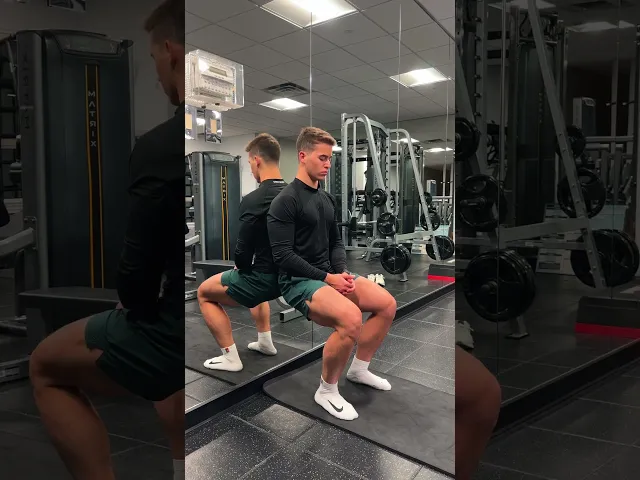
Best for: front of knee pain
Isometric Wall Sit
Wall Sit
Best for: front of knee pain
4 × 30–45 sec holds
Load: bodyweight
Focus: quiet knee, heavy heel
Why it works: Loads the quadriceps and patellar tendon heavily without moving the knee joint, helping numb pain signals while building front-of-knee endurance.
How to do it: Stand with your back against a wall and slide down until your knees are bent at roughly a 45 to 90-degree angle (start with 45). Keep your feet flat and press your lower back gently into the wall.
How much: 3 to 4 sets of 30 to 45 seconds.
Best for: INNER knee pain
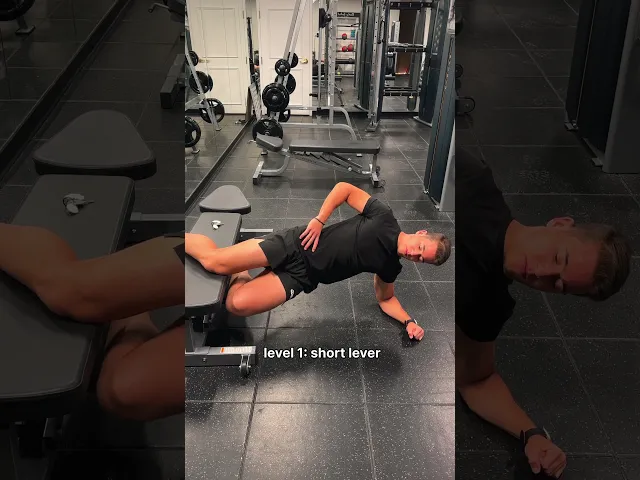
Copenhagen Plank
Best for: inner knee pain
3 × 20–30 sec each side
Load: bodyweight
Focus: own the inside line
Why it works: Strengthens the inner thigh (adductors), which plays a major role in keeping your knee aligned and stable when your foot hits the ground.
How to do it: Lie on your side. Place your top leg on a bench or sturdy chair (supported at the knee to start, or at the ankle to make it harder). Lift your hips off the floor so your body forms a straight line.
How much: 3 sets of 5 (5 second holds) per side
Best for: outer knee pain
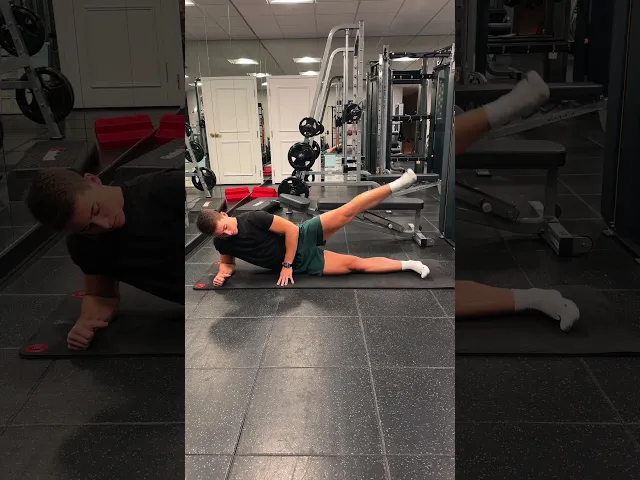
Side-Lying Leg Raise
Best for: outer knee pain
3 × 12 slow reps each side
Load: bodyweight
Focus: level pelvis, deliberate lift
Why it works: Targets the gluteus medius on the side of your hip. Strong hips stop your knee from caving inward during your running stride.
How to do it: Lie on your side with your legs straight. Keep your top foot pointed straight ahead (or slightly down toward the floor) and raise your top leg upward without letting your hips tilt backward. Lower slowly.
How much: 3 sets of 15 to 20 reps per side.
Exercises alone aren’t enough.
If you stop at the hold, you never teach your knee to handle the reality of running.
01
Dynamic Progression
Transitioning from static holds to ankle and hip control and strength in deeper ROM.

02
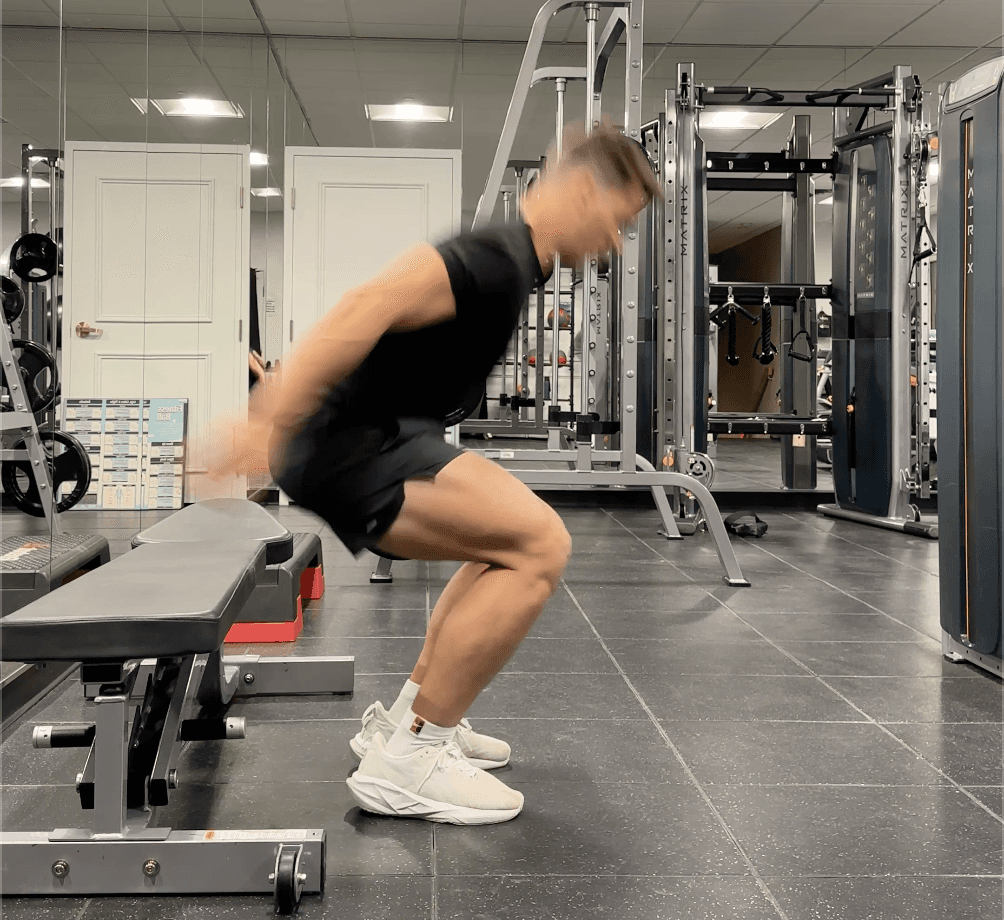
Plyometric Loading
Teaching your tendons to absorb and release energy quickly.
03
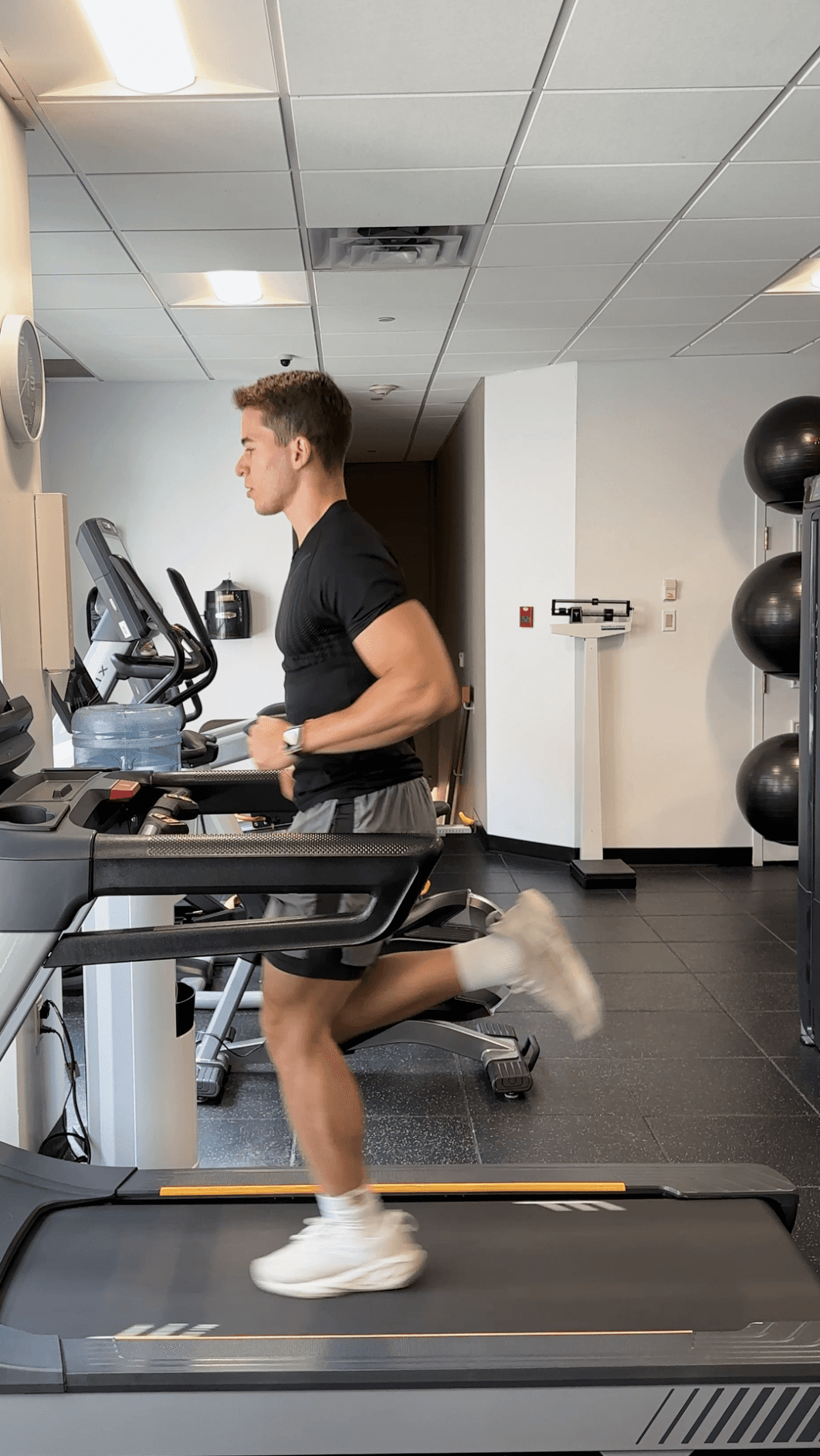
Graduated Volume
Returning to the road using structured load management so your knee adapts safely over time.
Skipping those steps will take you right back to square one.
But, these exercises alone aren’t enough.
Feeling pain-free during daily life is not the same as being ready to handle the stress of running.
These exercises build baseline strength, but running requires dynamic load tolerance.
If you go straight from doing wall sits back to running 5Ks or training for a race, you bypass 3 necessary steps:
01
Dynamic Progression
Transitioning from static holds to ankle and hip control and strength in deeper ROM.
02
Plyometric Loading
Teaching your tendons to absorb and release energy quickly.
03
Graduated Volume
Returning to the road using structured load management so your knee adapts safely over time.
Skipping those steps will take you right back to square one.
Your Next Steps
Your Next Steps
Fixing running pain does not have to be complicated, but for a long time, it was for me.
I spent six years stuck in a frustrating loop of rest, pain, rest, pain.
Always stopping, always starting over, and watching my race PB goals slip away.
But there was one truth I had to face:
I didn't have bad knees; I just had an incomplete process.
That experience is why I created the Iron Knee Academy.

Fixing running pain does not have to be complicated, but for a long time, it was for me.
I spent six years stuck in a frustrating loop of rest, pain, rest, pain.
Always stopping, always starting over, and watching my race PB goals slip away.
But there was one truth I had to face:
I didn't have bad knees; I just had an incomplete process.
That experience is why I created the Iron Knee Academy.
It is designed to help you bridge the gap from relief to dynamic strength so you can run consistently again without constantly starting over.
Click below to see how it works and whether it is the right next step for you.